How to Raise a Seed Round: A Step-by-Step Guide for Founders
How to raise a seed round in 2026 — when you're ready, how to build your investor list, run the process, and close, with realistic timelines and benchmarks.
Raising a seed round looks chaotic from the outside — a blur of coffee meetings, warm intros and term-sheet rumours. It isn't. A seed round is a process with a clear shape, and the founders who treat it like one close faster and on better terms than the ones who wing it.
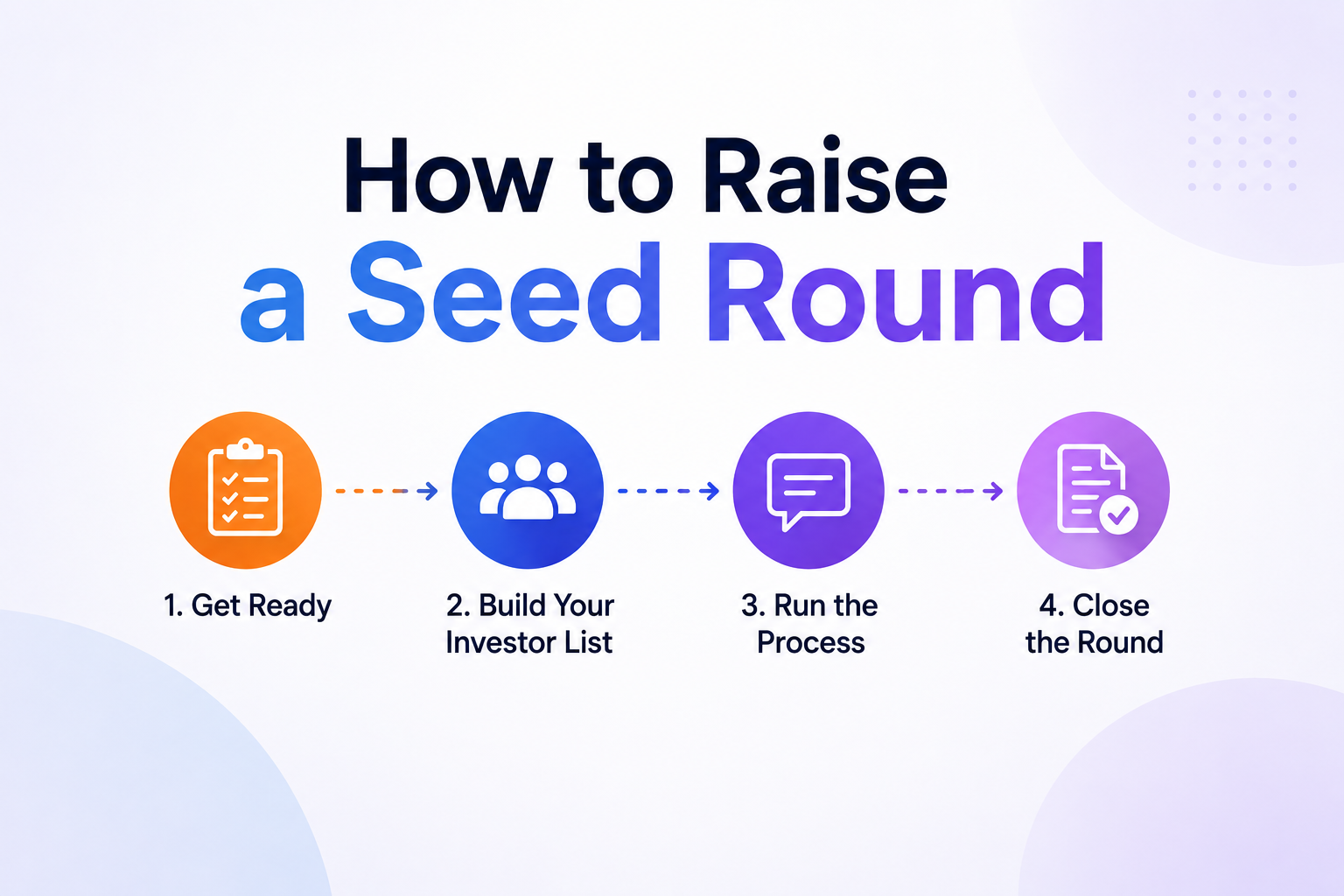
Here's how to raise a seed round in 2026, step by step: how to know you're ready, how to build your list, how to run the process and how to close.
How do you raise a seed round?
You raise a seed round by running a structured process: confirm you're ready, prepare your materials and metrics, build a large targeted investor list, run parallel conversations to create momentum, and close the committed capital on clear terms. Each step feeds the next, and skipping the early ones is what makes the later ones drag.
The mistake most first-time founders make is starting with the meetings. The meetings are step three. The work that decides whether they go well happens before any investor sees your deck.
Are you actually ready to raise a seed round?
You're ready for a seed round when you can show a working product and early evidence that customers want it. Seed investors in 2026 no longer fund prototypes and promises. The rough bar: for SaaS, around $5K–$50K in monthly recurring revenue; for enterprise, 5–15 paying customers; for consumer, real engagement and retention (Startups.com, 2025).
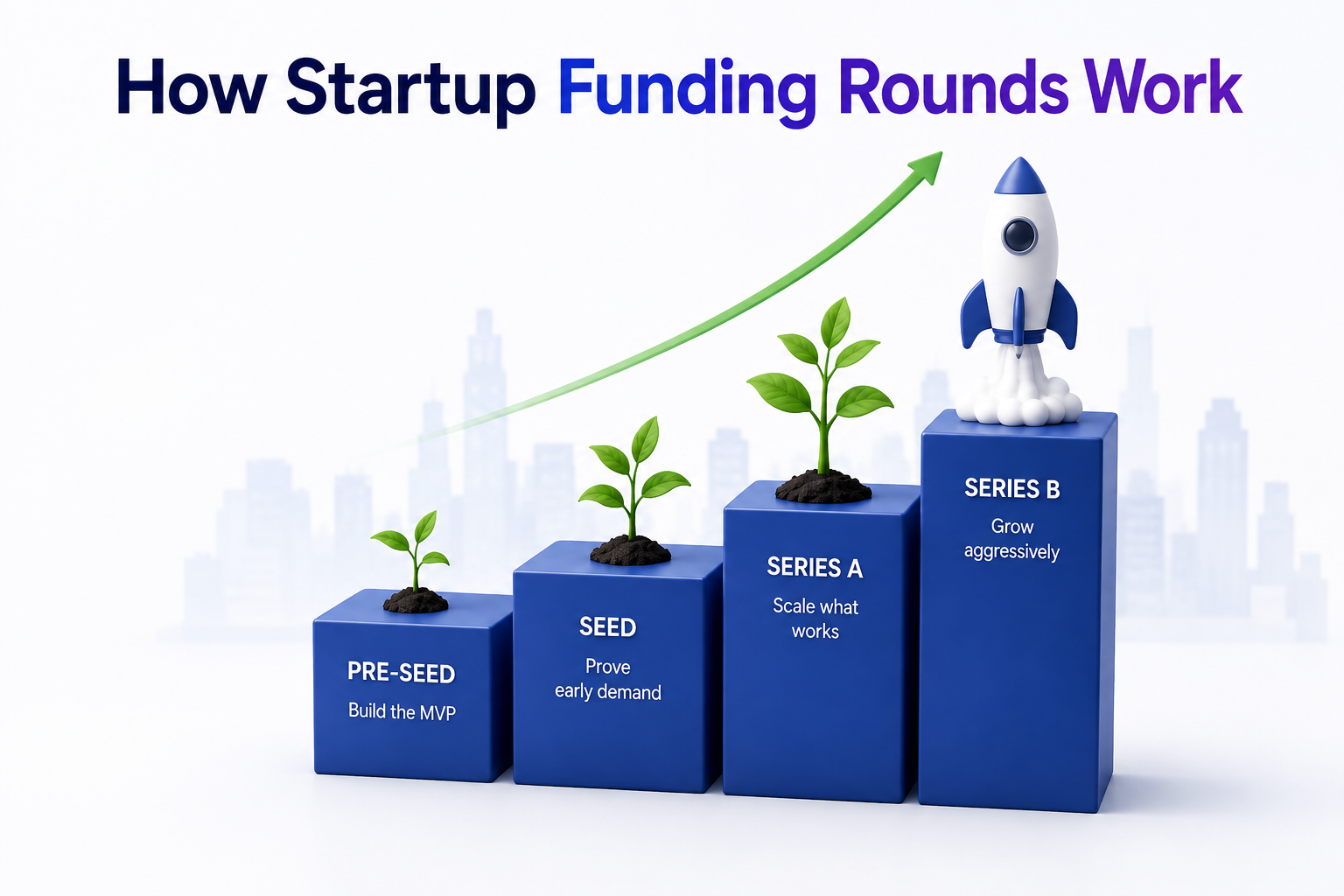
If you're not there yet, that's a pre-seed conversation, not a seed one — and forcing a seed raise too early is the single most common reason rounds stall. Be honest about which round your evidence actually supports.
Step 1: Get your materials and metrics ready
Before you email a single investor, prepare the pieces every seed process needs: a tight pitch deck (10–12 slides), a clear metrics story, a simple financial model and short answers to the hardest questions about your business. Investors decide fast, so the goal is a narrative that holds up under follow-up, not a longer deck.
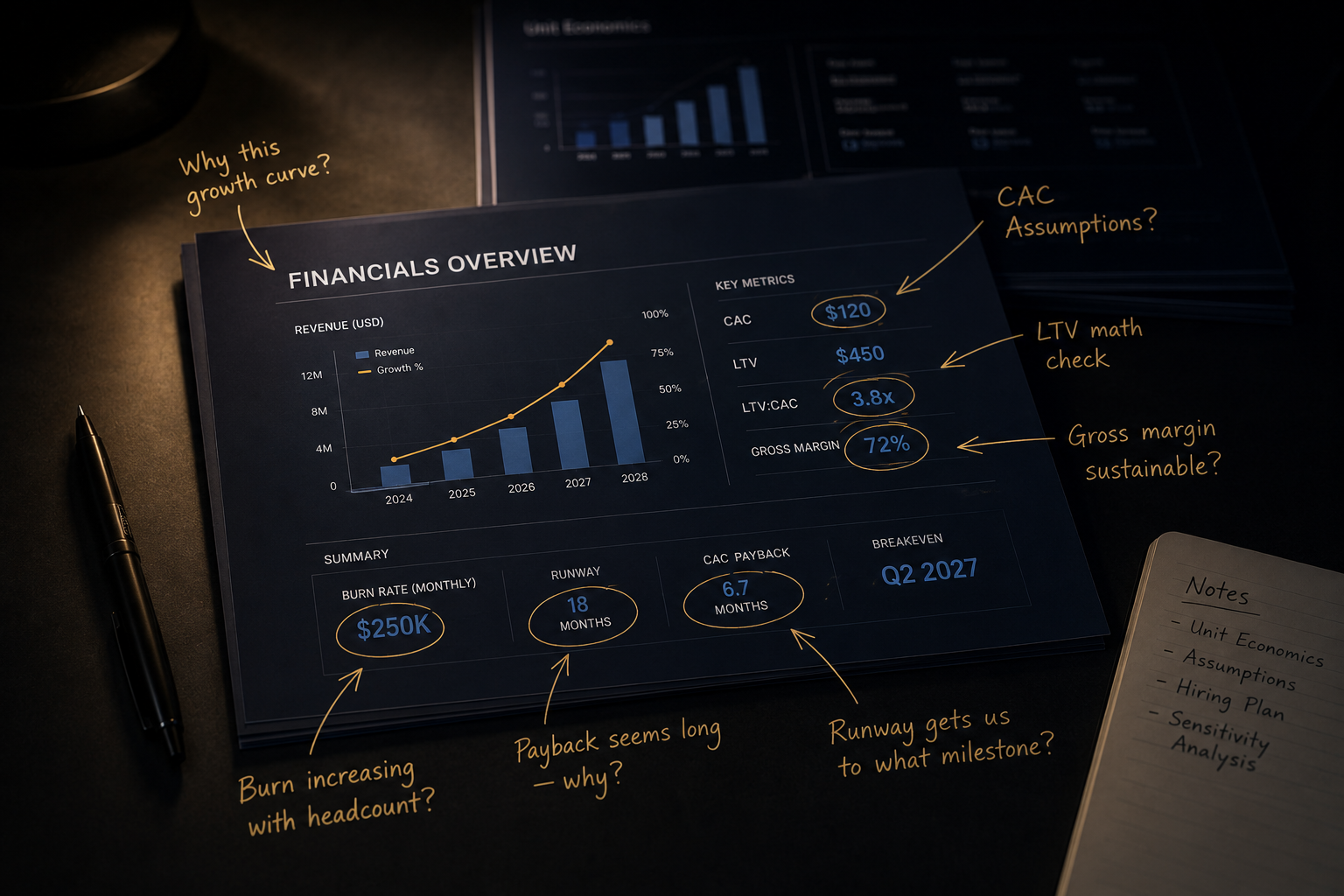
This is also where you pressure-test your pitch. The questions that lose rounds are rarely the ones you rehearsed — they're the follow-ups. Running your pitch against tough, investor-style questioning before the real meetings, for example with Startup Pitch Analyser, surfaces the weak points while fixing them still costs nothing.
Step 2: Build your investor list
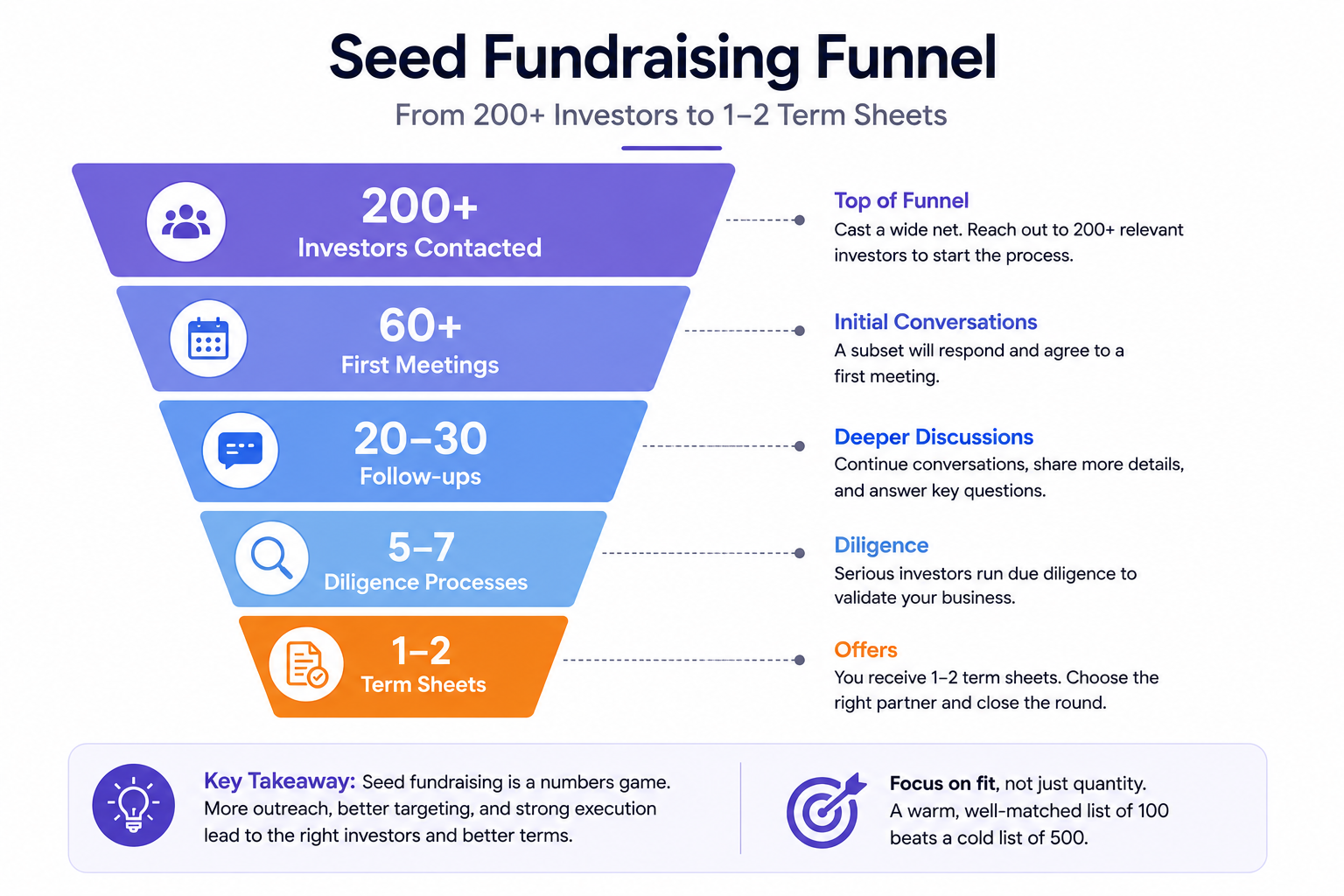
Build a target list far larger than the number of cheques you need, because seed fundraising is a numbers game. Founders typically contact 200+ investors to close a $3–4M seed round, which converts to roughly 60+ first meetings, 20–30 follow-ups, 5–7 diligence processes and 1–2 term sheets (NYU Entrepreneurship, 2025).
Segment the list by fit: dedicated seed funds, multi-stage funds with seed programs, sector-focused angels and syndicates. Prioritise investors who back your stage, sector and geography — a warm, well-matched list of 100 beats a cold list of 500. In India, this also means mapping SEBI-registered angel funds and active early-stage networks relevant to your sector.
Step 3: Run the process
Run your meetings in parallel, not one at a time, so that interest compounds into momentum. Investors move when other credible investors are moving. Start with a few lower-priority names to sharpen your pitch, then concentrate your best-fit targets into a tight window so timelines overlap.
Warm introductions convert far better than cold outreach, so spend the weeks before your raise building relationships you can activate. The best-run seed rounds feel like the natural next step in conversations that were already happening, not a cold start.
Step 4: Handle the hard questions and close
Closing a seed round comes down to surviving diligence and holding your terms. Once an investor is interested, expect deeper questions on your market, your metrics and your assumptions — and a term sheet if it goes well. Know your numbers cold, because hesitation on a basic metric can cost you a round.
When you have a lead and a term sheet, momentum is your friend: fill the round quickly, keep terms consistent across investors, and get to signed documents before enthusiasm cools. This is the point where founders who prepared for the Q&A pull ahead of those who didn't.
How long does a seed round take?
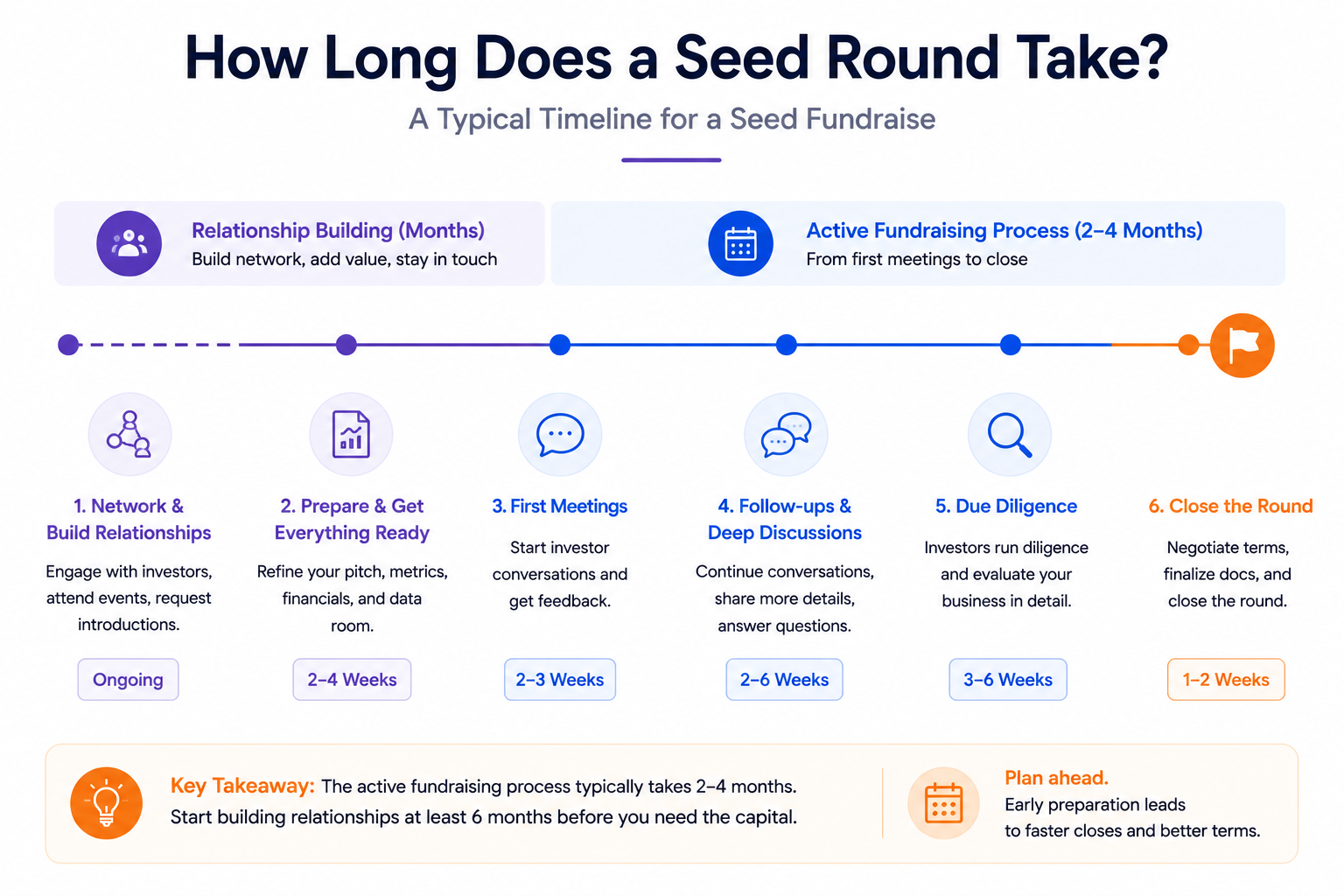
A seed round typically takes 2–4 months from first meetings to close, though preparation and relationship-building should start months earlier. Plan to begin conversations roughly six months before you actually need the capital. Rounds that drag past four months usually signal a mismatch — either the story isn't landing or the raise started before the evidence was ready.
The mistake that stalls most seed rounds
The most common way a seed round stalls is starting it before the evidence supports it. A big raise on a thin story doesn't just fail to close — it burns your best investor relationships, because those investors now remember a "no." It's rarely a sign the founder isn't good enough. It's a timing and preparation problem, and both are fixable. Raise when your metrics can carry the conversation, not when your bank balance says you have to.
Frequently asked questions
How many investors should I contact for a seed round?
Plan for 200+ targeted investors to close a typical seed round — that funnels down to roughly 60 first meetings and 1–2 term sheets (NYU Entrepreneurship, 2025).
How long does it take to raise a seed round?
Usually 2–4 months of active process, on top of months of earlier relationship-building. Start six months before you need the money.
Do I need revenue to raise a seed round?
Usually yes, or at least strong traction signals — early revenue, engaged users, or paying pilots. Pure idea-stage raises are a pre-seed conversation.
Should I raise on a SAFE or a priced round?
Smaller seed rounds (under ~$3M) often use post-money SAFEs for speed; larger rounds tend to be priced, with a lead investor and board seat. Both are common in 2025–2026.