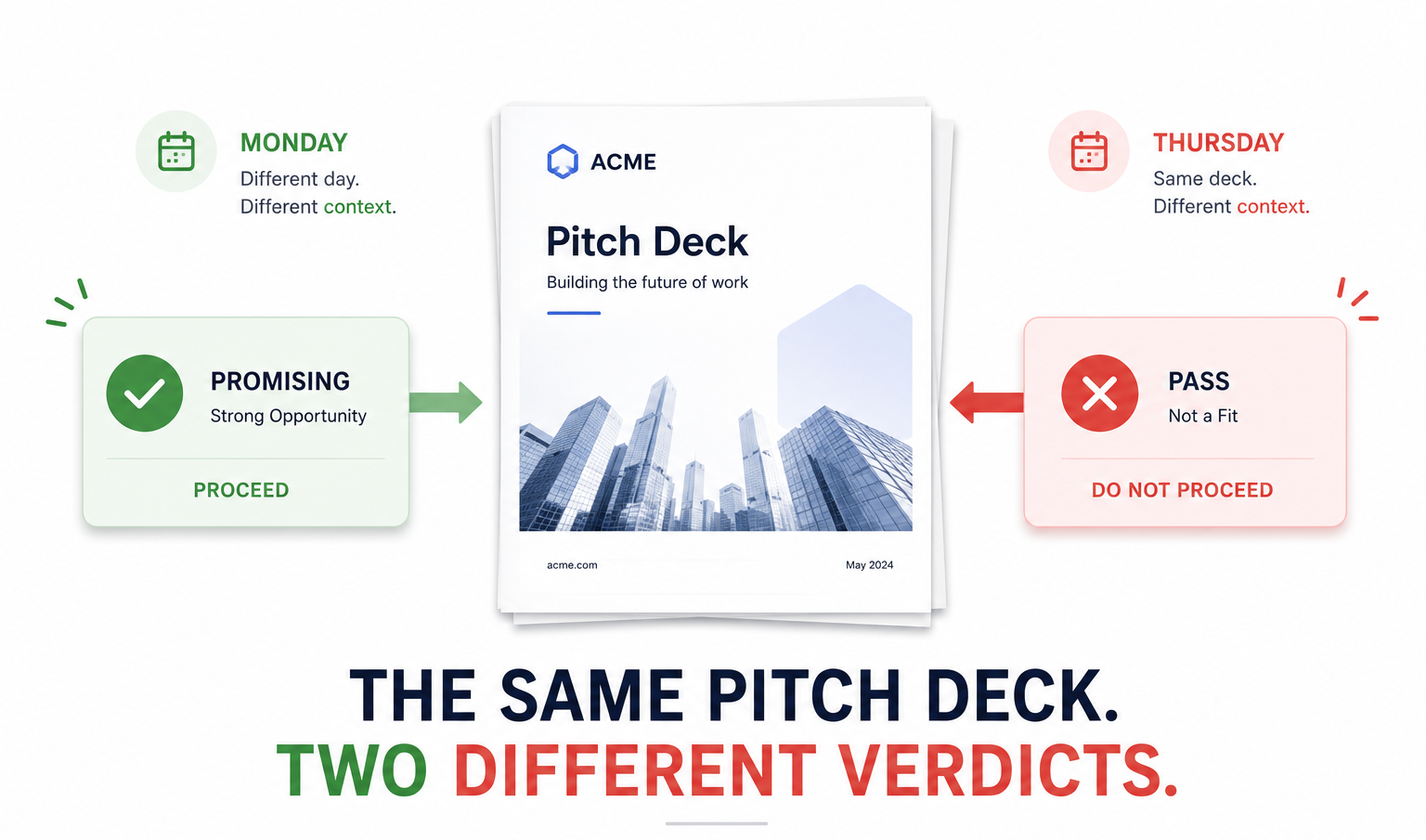
The Evaluation Gap: Why Pitch Decks Deserve More Than a Surface Read
Startup founders spend weeks building pitch decks. Investors want to read them properly. Volume makes it impossible. Here is what the best funds are doing.

A startup founder I spoke with earlier this year described something that stayed with me not because it was unusual, but because it captured a tension that sits at the heart of how early-stage investing works today.
She had spent three weeks building her startup pitch deck. Not occasional attention—three weeks of sustained, focused effort. Refining the market sizing slide. Rewriting the problem statement four times. Running the financial model through three iterations. Pressure-testing every claim with her co-founder until they were confident each one held up under scrutiny.
She submitted it to a fund she had been trying to reach for two months.
The partner at that fund almost certainly wanted to give that pitch deck a proper read. Most startup investors I have spoken with take their responsibility to founders seriously. They understand the asymmetry. They feel it. The effort behind every deck that arrives in their inbox is real, and they know it.
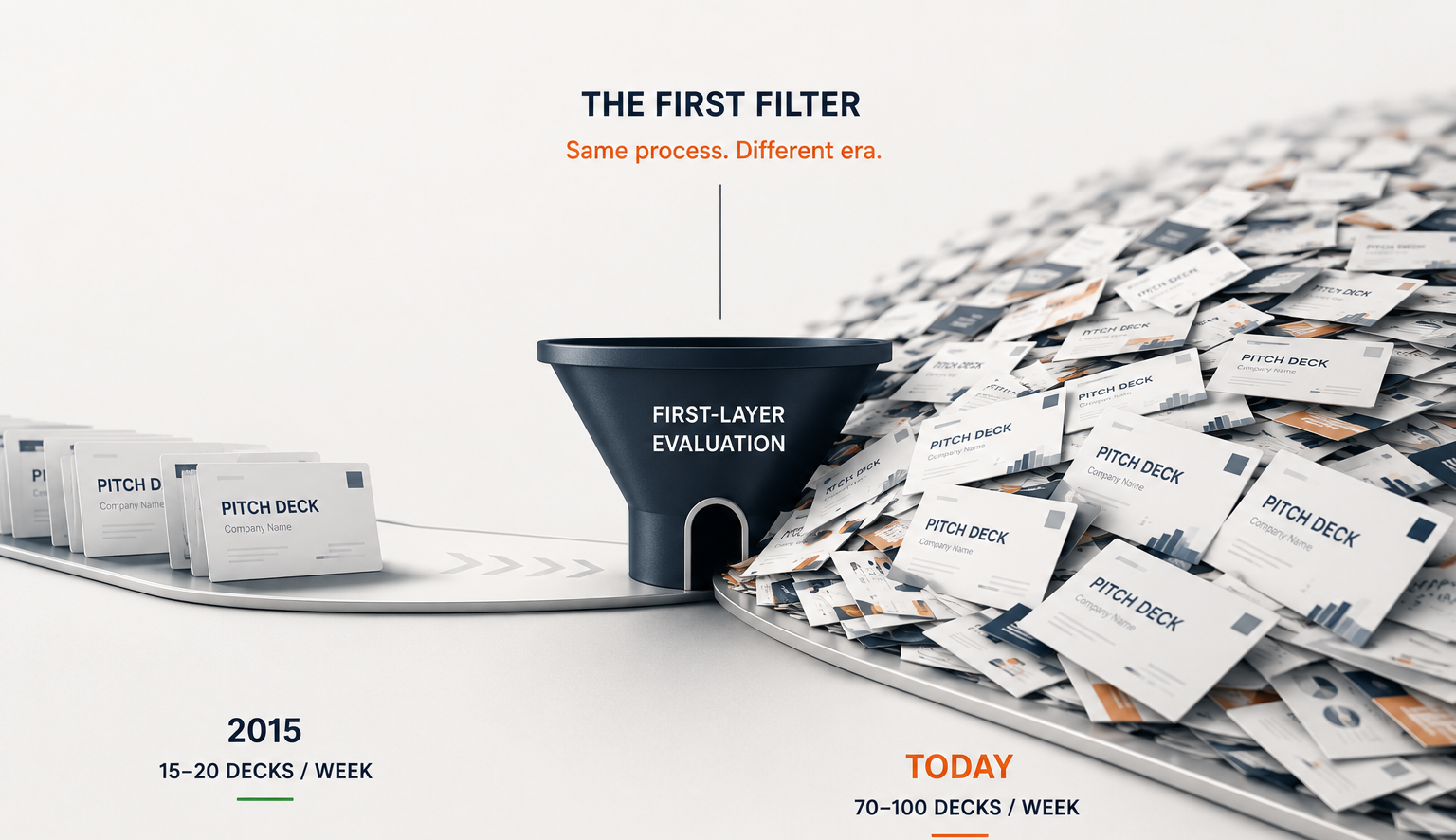
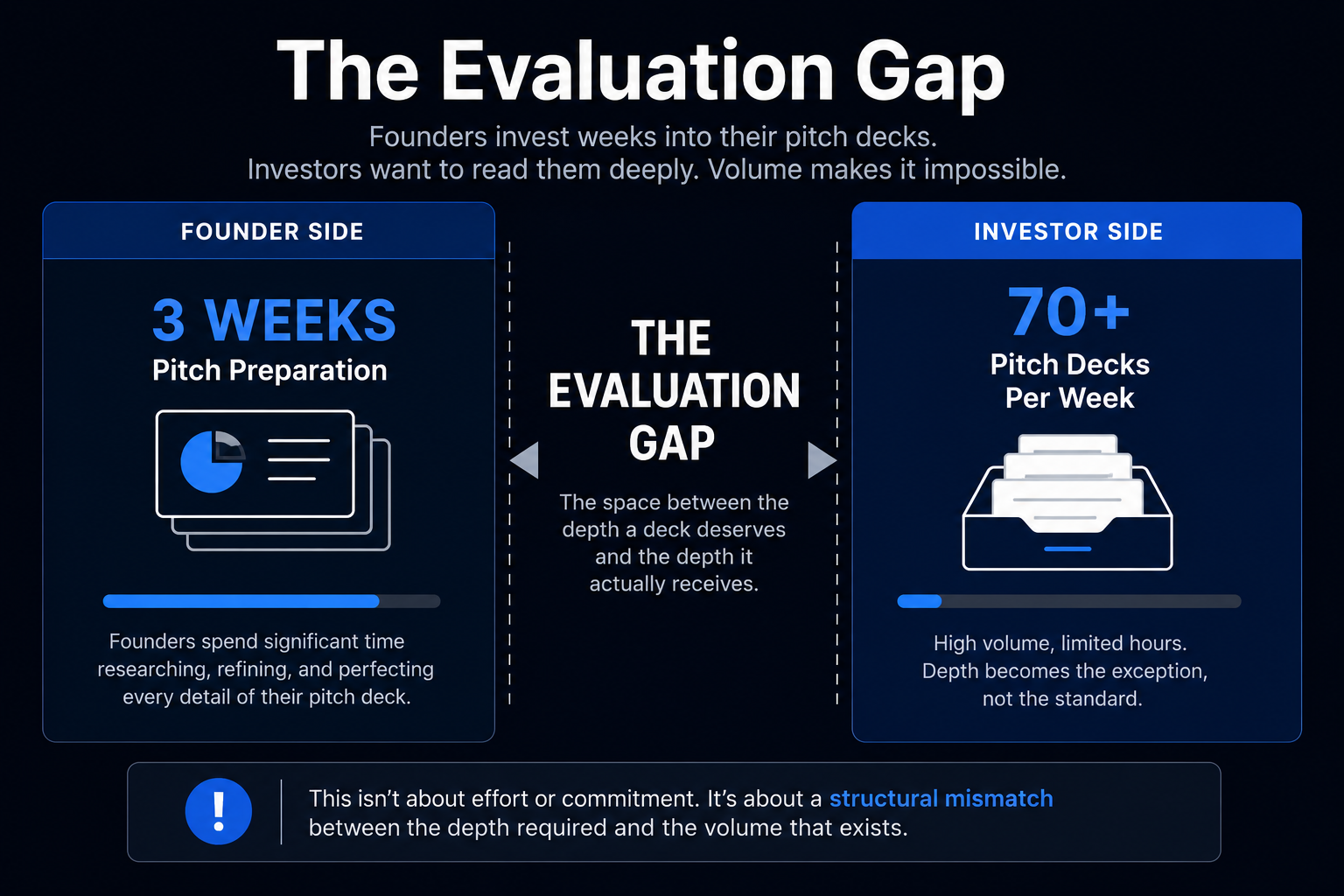
But when seventy pitch decks arrive in a single week—on top of portfolio calls, LP updates and three founder meetings already on the calendar—giving every deck the depth it deserves becomes structurally impossible. Not because the investor does not care. Because the hours simply do not exist.
This is the evaluation gap. The space between the depth a pitch deck deserves and the depth it actually receives. It is not created by any individual's shortcoming. It is created by a structural mismatch between volume and bandwidth that has been widening for years.
Why Pitch Decks Deserve More Than a Quick Read
The best startup investors will tell you the same thing: the real signal in a pitch deck is almost never on the first page. The first page is where every deck sounds like every other deck. The differentiation lives further in.
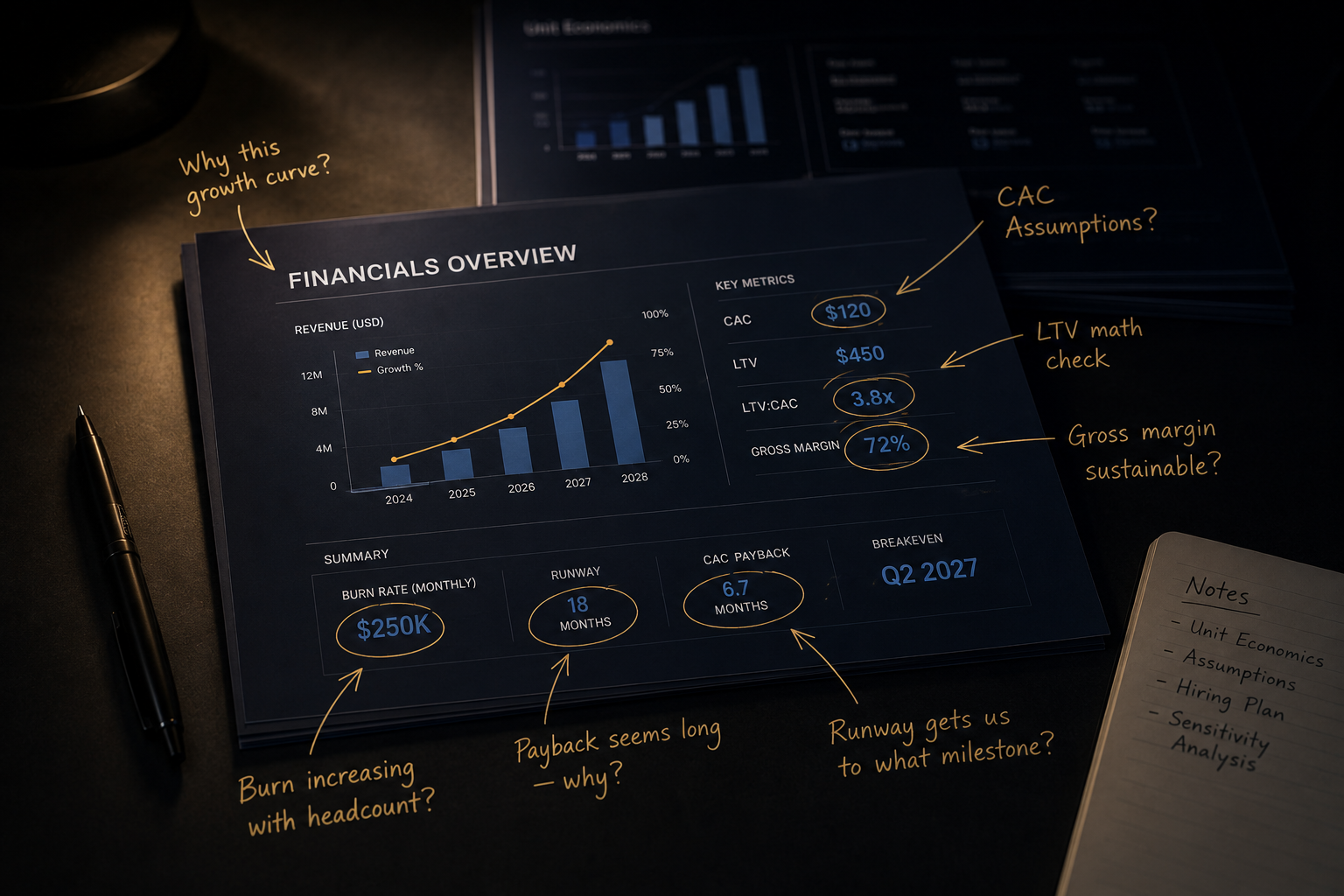
It lives in the market sizing approach that reveals the founder sees a wedge nobody else is talking about. It lives in the unit economics slide that shows a path most surface reads never reach. It lives in the team narrative that explains not just who these people are, but why they have a specific, defensible advantage in this particular market.
These are the slides that build conviction. They are also the slides that require time—the kind of focused, uninterrupted evaluation time that becomes scarce when the weekly inbound reaches seventy or more pitch decks.
At proper evaluation depth, an investor can meaningfully review ten to fifteen pitch decks per day. That number has not changed. What has changed is the volume arriving on the other side. The result is a widening gap between what deserves a deep read and what actually gets one.
The Volume Has Changed. The Infrastructure Has Not.
The volume of inbound dealflow reaching early-stage startup investors has grown dramatically in the past five years. AI startups alone have created an explosion in new ventures seeking funding. Platforms that make it easy to submit a pitch deck, communities that broadcast investment opportunities, accelerator cohorts producing hundreds of graduates simultaneously—all of it has increased inbound volume faster than any team can absorb.
The infrastructure on the receiving end has not kept pace. Most funds still manage inbound with upgraded versions of email folders and spreadsheets. The tools were built for twenty decks a week. The inbox now delivers seventy. The hours have not grown to match.
The result is predictable: the pitch decks that receive the most attention are the ones arriving through warm channels or landing on a day when the reviewer has bandwidth. The rest get a surface scan. Not because the investor decided they were less worthy—but because the system ran out of capacity before it reached them.

What Gets Lost When Pitch Decks Get a Surface Read?
When a startup pitch deck gets a surface-level pass, what gets lost is often what the investor would have wanted to see most.
The counterintuitive market insight on slide eight that reframes the whole opportunity. The distribution partnership buried in the appendix that explains how a small team is acquiring customers at a fraction of the expected cost. The founder background that reveals fifteen years of domain expertise in the exact space the fund has been looking to back.
Every experienced startup investor has a story about the deal they almost missed—the one that looked average on the first page and turned out to be exceptional once someone had the time to read past slide four. The evaluation gap means more of those stories end differently. The deck does not get the deeper read. The investor does not see the signal. The deal moves on.
The cost runs both directions. The founder whose pitch preparation goes unread does not get the evaluation their work earned. The investor who would have built conviction on that deal never gets the chance to see it. The evaluation gap is not one side's loss—it is a structural cost absorbed by everyone in the pipeline.
How Are the Best Funds Closing the Evaluation Gap?
The funds that are solving this problem share a common insight: the first layer of startup evaluation is critical, but it is not where experienced investor judgment creates its highest value.
The highest value comes later—in the founder conversation that changes what you thought you knew about the market. In the diligence call that reveals whether the moat is real or imagined. In the relationship built eighteen months before the Series A, when the founder makes you the first call because you took the time to understand their business before anyone else did.
None of those moments happen in the inbox. None of them happen during the first-pass sort of cold inbound pitch decks. They happen when an investor has bandwidth, context and focus—all of which get consumed when the first layer eats the week.
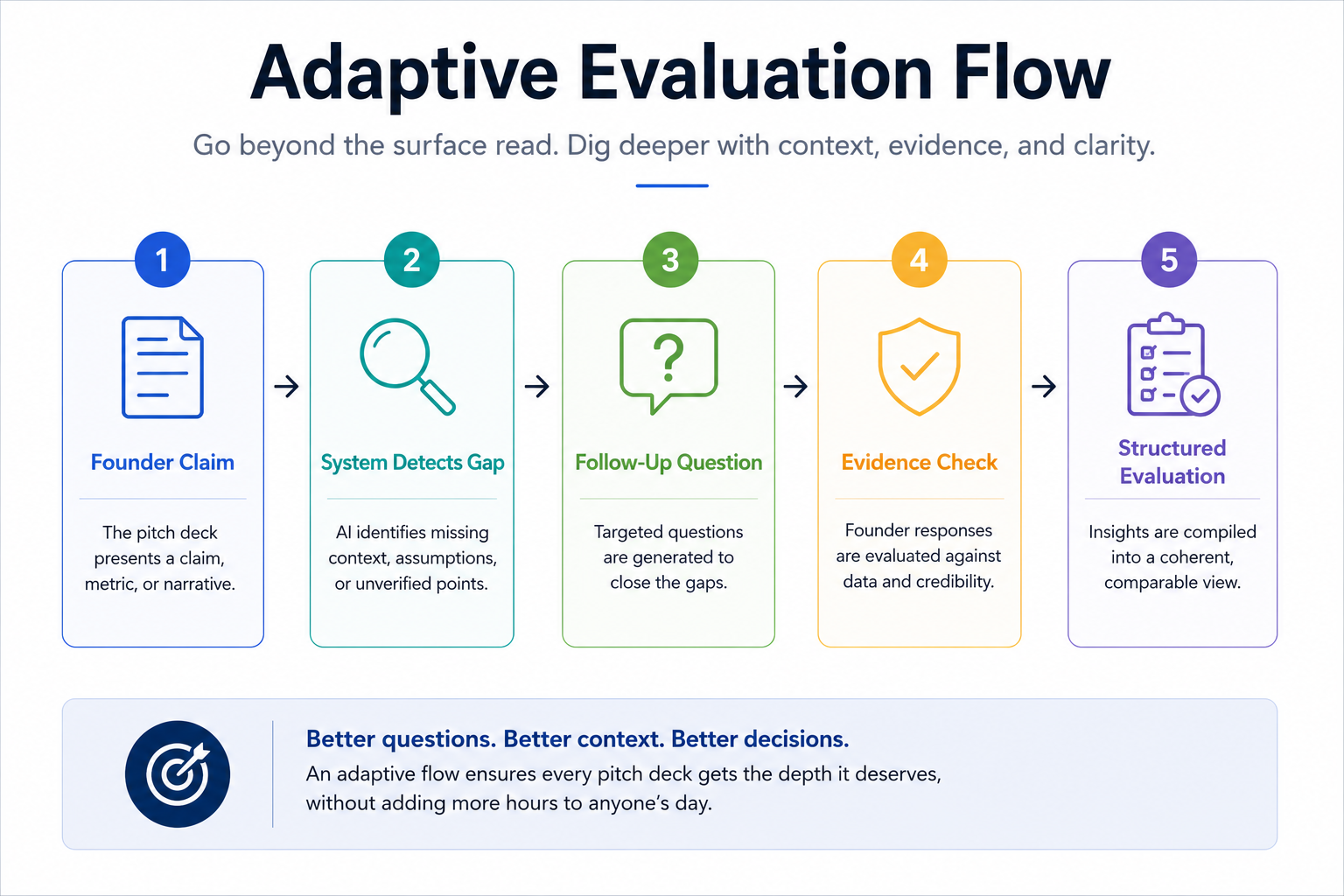
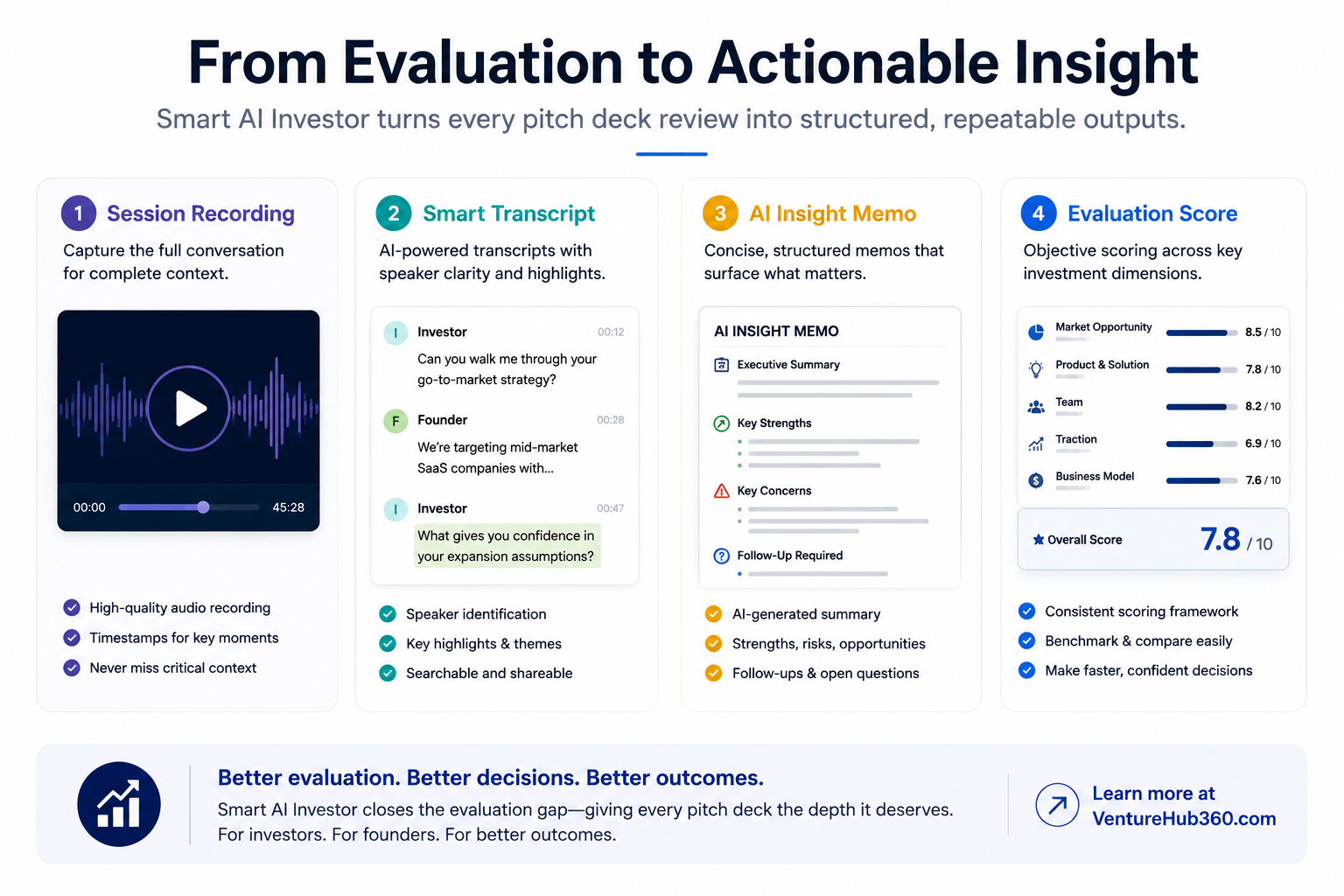
The smartest startup investors are building systems that handle first-layer evaluation consistently, at scale, without consuming partner or associate time. These systems read the whole deck. They conduct structured sessions with founders—asking follow-up questions that probe beneath the surface, checking whether claims hold up against the submitted data, testing whether the founder's understanding of their own business is grounded in evidence or narrative. The output is a structured evaluation with scoring, risk flags, and a full session record so the investment team's first interaction with a deal starts from a position of intelligence, not zero.
This is not about replacing investor judgment. It is about ensuring that judgment is applied to the opportunities that deserve it—after the first layer has done its job of surfacing what matters, consistently, at any volume.
What Changes When Every Pitch Deck Gets a Full Read
When the first layer handles depth and consistency—when every startup pitch deck in the pipeline receives the same structured evaluation regardless of how many others arrived that day—the downstream effects are significant.
The investment team starts every deal from a position of structured intelligence. They know where the strengths are, where the gaps sit, and which questions matter most. The first conversation with a founder is not twenty minutes of basic information-gathering—it is a focused discussion about the things that actually determine whether the investment makes sense.
The strong deal from an unfamiliar market that would have gotten a surface scan now gets the same structured attention as the warm-intro deal from a familiar geography. The founder who submitted on Friday evening gets the same evaluation quality as the one who submitted Monday morning. Consistency at the first layer means the team can trust that what reaches the decision table represents the actual quality of what came in.
More importantly, the hours that used to go to first-layer sorting are now spent on the work that actually produces returns. More real founder conversations. Deeper diligence on live deals. More time building the relationships that generate the best deal access long before a formal fundraise begins. The thinking time that produces the sharpest investment theses gets protected instead of consumed.
The Evaluation Gap Is Structural. The Solution Is Too.
The evaluation gap is not going to close on its own. The volume of inbound dealflow continues to grow—more startups, more platforms, more open applications, more global founders reaching funds they could not have accessed five years ago. The direction is clear: more pitch decks, same hours in the day.
The funds that recognise this as a structural problem are solving it structurally. Not by asking their teams to work harder or hiring more associates to absorb volume. By building a first layer that handles depth and consistency at scale, so the investment team's expertise is applied where it creates the most value downstream, in the conversations and diligence that build real conviction.
Every pitch deck represents months of work by a founder who believed their startup was worth building. Every startup investor I have spoken with wants to give those decks the read they deserve. Closing the evaluation gap is how both sides get what they need.
Smart AI Investor conducts structured AI-led pitch sessions with every founder in your pipeline, researches each startup independently, and delivers IC-ready evaluation reports — so your team can evaluate five to ten times more deals per cycle without adding headcount.